Publications
publications by categories in reversed chronological order. generated by jekyll-scholar.
2026
-
 Revealing ultrafast proton-transfer-mediated autoionization as a source of low-energy electrons in hydrogen-bonded systemsWael Iskandar, Yi-Siang Wang, Victor A. Suarez, and 10 more authorsNature Communications, May 2026Publisher: Nature Publishing Group
Ionizing radiation can trigger ultrafast proton transfer, a central mechanism in many chemical and biological functions, that in turn can enable or suppress electron relaxation processes and consequently cause abrupt changes in the reaction pathway. This study combines theory and experiment to probe ultrafast relaxation and dissociation in water dimers following inner- and outer-valence photoionization. By tracking electron and nuclear motion simultaneously, we reveal competing fragmentation pathways that produce low-energy electrons, which are key agents in radiation-induced chemistry, including DNA damage. While low-energy electrons are known to arise via intermolecular Coulombic decay, here we identify a faster relaxation mechanism gated by proton transfer following inner-valence ionization, which we call proton-transfer-mediated autoionization. Occurring within 10 femtoseconds, this process alters fragmentation outcomes, yielding either D3O+ + OD+ or D2O+ + D2O+, depending on the interplay of proton migration and hydrogen back-transfer. Our findings underscore the intricate coupling between electronic and nuclear dynamics in hydrogen-bonded systems and establish proton-transfer-mediated autoionization as a significant pathway for low-energy electron generation.
- TiDES: A time-dependent electronic structure code for real-time electron and spin dynamicsMatthew C. Rohan, Victor A. Suarez, Mikhayla Clothier, and 1 more authorThe Journal of Chemical Physics, Jun 2026
In this work, we present the TiDES (Time-Dependent Electronic Structure) code, an open-source real-time electronic structure theory package. The software is written in Python and interfaces with the Python-based Simulations of Chemistry Framework (PySCF), an open-source quantum chemistry library. The philosophy of the TiDES software package is to provide an incredibly modular real-time software package to allow for easy development and implementation of new methodology. The package allows for explicit time propagation of chemical systems within the spin-restricted, unrestricted, and generalized frameworks of both real-time time-dependent Hartree–Fock and real-time time-dependent density functional theory. Additional features include the ab initio Ehrenfest dynamics method for the simulation of coupled electronic and nuclear motion and the incorporation of a complex absorbing potential that enables the simulation of ionization events. To illustrate both the value of real-time dynamics and the intuitive nature of TiDES, we simulate spectroscopic properties and non-equilibrium electron and spin dynamics in several example systems. We also show how general external potentials can be defined and easily applied during time propagation. Lastly, the features within PySCF, such as spin–orbit coupling, interface readily with the real-time calculations, providing a powerful tool for simulating electron and spin dynamics with the capacity for extensive customization.
- Dynamics and Energy Relaxation of Formic Acid Dimers Following Inner Valence IonizationJ. X. Zhong Manis, Y. S. Wang, M. C. Rohan, and 17 more authorsMay 2026
We study gas-phase dissociation of the formic acid dimer dication as a model for DNA base-pair interactions after inner-valence 56 eV EUV ionization. Employing reaction microscopy, we measure the 3D momenta of electrons and fragment ions in coincidence to ...
2025
- Analysis of variants of non-adiabatic ring polymer molecular dynamics for calculating excited state dynamicsZiying Cao and Joshua S. KretchmerThe Journal of Chemical Physics, May 2025
The non-adiabatic ring polymer molecular dynamics (NRPMD) method, which combines the path-integral ring polymer molecular dynamics framework for the nuclei with the Meyer–Miller–Stock–Thoss mapping of the electronic states, is a powerful tool for simulating non-adiabatic dynamics including nuclear quantum effects. However, challenges arise in utilizing NRPMD associated with zero-point energy leakage between the electronic and nuclear degrees of freedom and ambiguities in how to apply the method under non-equilibrium conditions. Here, we explore several variants of NRPMD and compare their performance using a set of benchmark systems for excited-state electronic population dynamics. Within this context, we adopt an idea from recent work on the linearized semi-classical initial value representation and derive a new NRPMD correlation function for the population of the electronic states in terms of a trace-less operator and the identity operator. The in-depth analysis of the different choices when utilizing NRPMD provides new insight into the practical implementation of the method and related techniques.
- A ring polymer molecular dynamics extension of the mapping approach to surface hopping: Incorporation of nuclear quantum effectsZiying Cao, Victor A. Suarez, and Joshua S. KretchmerDec 2025
In this work, we aim to incorporate explicit nuclear quantum effects into the mapping approach to surface hopping (MASH). To accomplish this goal, we develop an extension of MASH using the ring-polymer (RP) formalism, which we term RP-MASH. Within RP-MASH,...
2024
-
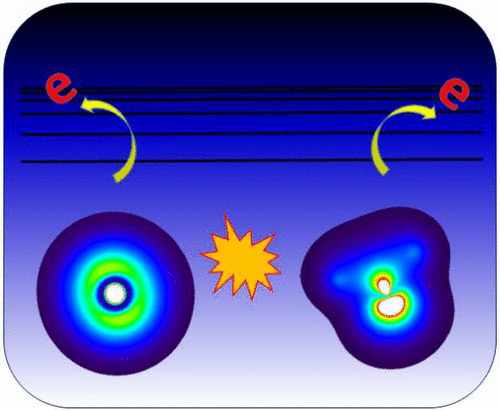 Modeling Intermolecular Coulombic Decay with Non-Hermitian Real-Time Time-Dependent Density Functional TheoryYi-Siang Wang, James X. Zhong Manis, Matthew C. Rohan, and 2 more authorsThe Journal of Physical Chemistry Letters, Aug 2024Publisher: American Chemical Society
In this work, we investigate the capability of using real-time time-dependent density functional theory (RT-TDDFT) in conjunction with a complex absorbing potential (CAP) to simulate the intermolecular Coulombic decay (ICD) processes following the ionization of an inner-valence electron. We examine the ICD dynamics in a series of noncovalent bonded dimer systems, including hydrogen-bonded and purely van der Waals (VdW)-bonded systems. In comparison to previous work, we show that RT-TDDFT simulations with a CAP correctly capture the ICD phenomenon in systems exhibiting a stronger binding energy. The calculated time scales for ICD of the studied systems are in the range of 5–50 fs, in agreement with previous studies. However, there is a breakdown in the accuracy of the methodology for the pure VdW-bonded systems. Overall, the presented RT-TDDFT/CAP methodology provides a powerful tool for differentiating between competing electronic relaxation pathways following inner-valence or core ionization without necessitating any a priori assumptions.
2023
- A multi-fragment real-time extension of projected density matrix embedding theory: Non-equilibrium electron dynamics in extended systemsDariia Yehorova and Joshua S. KretchmerThe Journal of Chemical Physics, Apr 2023
In this work, we derive a multi-fragment real-time extension of the projected density matrix embedding theory (pDMET) designed to treat non-equilibrium electron dynamics in strongly correlated systems. As in the previously developed static pDMET, the real time pDMET partitions the total system into many fragments; the coupling between each fragment and the rest of the system is treated through a compact representation of the environment in terms of a quantum bath. The real-time pDMET involves simultaneously propagating the wavefunctions for each separate fragment–bath embedding system along with an auxiliary mean-field wavefunction of the total system. The equations of motion are derived by (i) projecting the time-dependent Schrödinger equation in the fragment and bath space associated with each separate fragment and by (ii) enforcing the pDMET matching conditions between the global 1-particle reduced density matrix (1-RDM) obtained from the fragment calculations and the mean-field 1-RDM at all points in time. The accuracy of the method is benchmarked through comparisons to time-dependent density-matrix renormalization group and time-dependent Hartree–Fock (TDHF) theory; the methods were applied to a one- and two-dimensional single-impurity Anderson model and multi-impurity Anderson models with ordered and disordered distributions of the impurities. The results demonstrate a large improvement over TDHF and rapid convergence to the exact dynamics with an increase in fragment size. Our results demonstrate that the real-time pDMET is a promising and flexible method that balances accuracy and efficiency to simulate the non-equilibrium electron dynamics in heterogeneous systems of large size.
-
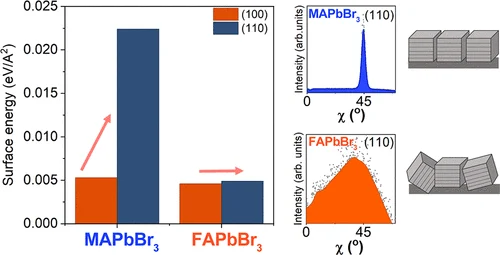 Solvent and A-Site Cation Control Preferred Crystallographic Orientation in Bromine-Based Perovskite Thin FilmsJuanita Hidalgo, Yu An, Dariia Yehorova, and 8 more authorsChemistry of Materials, Jun 2023Publisher: American Chemical Society
Preferred crystallographic orientation in polycrystalline films is desirable for efficient charge carrier transport in metal halide perovskites and semiconductors. However, the mechanisms that determine the preferred orientation of halide perovskites are still not well understood. In this work, we investigate crystallographic orientation in lead bromide perovskites. We show that the solvent of the precursor solution and organic A-site cation strongly affect the preferred orientation of the deposited perovskite thin films. Specifically, we show that the solvent, dimethylsulfoxide, influences the early stages of crystallization and induces preferred orientation in the deposited films by preventing colloidal particle interactions. Additionally, the methylammonium A-site cation induces a higher degree of preferred orientation than the formamidinium counterpart. We use density functional theory to show that the lower surface energy of the (100) plane facets in methylammonium-based perovskites, compared to the (110) planes, is the reason for the higher degree of preferred orientation. In contrast, the surface energy of the (100) and (110) facets is similar for formamidinium-based perovskites, leading to lower degree of preferred orientation. Furthermore, we show that different A-site cations do not significantly affect ion diffusion in bromine-based perovskite solar cells but impact ion density and accumulation, leading to increased hysteresis. Our work highlights the interplay between the solvent and organic A-site cation which determine crystallographic orientation and plays a critical role in the electronic properties and ionic migration of solar cells.
2022
- Interfacial thermal transport between graphene and diamaneYang Hong and Joshua S. KretchmerThe Journal of Chemical Physics, Apr 2022
Similar to graphene, diamane is a single layer of diamond that has been investigated in recent years due to its peculiar mechanical, thermal, and electronic properties. Motivated by earlier work that showed an exceptionally high intra-plane thermal conductivity in diamane, in this work, we investigate the interfacial thermal resistance (R) between graphene and diamane using non-equilibrium classical molecular dynamics simulations. The calculated R for a pristine graphene and AB-stacked diamane at room temperature is 1.89 × 10⁻⁷ K m2/W, which is comparable to other common graphene/semi-conductor bilayers. These results are understood in terms of the overlap of the phonon density of states between the graphene and diamane layers. We further explore the impact of stacking pattern, system temperature, coupling strength, in-plane tensile strain, and hydrogenation ratio on R. Intriguingly, we find that unlike single layer diamane, where the intra-plane thermal conductively is reduced by ∼50% under 5% strain, the inter-plane thermal conductance of the graphene–diamane bilayer is enhanced by ∼50% under 8% strain. The difference is caused by the opposite behavior between the inter- and intra-layer conductances as phonon relaxation time is decreased. The high intra-plane thermal conductivity and low inter-plane thermal resistance shows the high potential of using graphene–diamane heterostructures in electronic applications.
- Kinetically constrained ring-polymer molecular dynamics extended to electronically adiabatic reaction regimesVictor A. Suarez and Joshua S. KretchmerChemRxivPublisher: ChemRxiv
Kinetically-constrained ring-polymer molecular dynamics (KC-RPMD) is an approximate quantum dynamical method for treating electronically non-adiabatic processes in condensed phase systems, predicting accurate electron transfer (ET) rate constants in the normal and inverted Marcus regimes through computationally efficient classical equations of motion. The favorable properties of KC-RPMD in the weak diabatic coupling regime have been well investigated. However, an in-depth study of its performance in the strong coupling regime has not been performed until now. In this work, we identify a breakdown of free energies and ET rates predicted by traditional KC-RPMD in the strong coupling regime. We extend KC-RPMD to allow for the direct simulation of systems spanning the full range of diabatic coupling strengths, maintaining all the favorable properties in the weak coupling regime while recovering the appropriate adiabatic description in the strong coupling regime. This is accomplished through a modification to the Gaussian restraint penalty function, which is made to gradually loosen and vanish at strong coupling. We demonstrate the accuracy of KC-RPMD on a variety of spin-boson model systems spanning a wide range of diabatic coupling strengths.
- Investigating Interlayer Charge Transport of 2D Lead Halide Perovskites via Constrained Density Functional TheoryJordan Hale, Mikhayla Clothier, and Joshua S. KretchmerChemRxivPublisher: ChemRxiv
We investigate interlayer charge transport in two-dimensional (2D) lead halide perovskites (LHPs) using constrained density functional theory (CDFT) to compute diabatic couplings of both interlayer electron and hole transfer. We first examine the dependence of the results on various choices within the CDFT methodology and conclude that an increasing amount of exact Hartree-Fock exchange with a larger surface dimension of the supercell improves the overall quality of the results. We then examine the dependence of the electron and hole diabatic couplings on the nature of the organic linker, the interlayer distance, and the crystal structure of the inorganic lattice. Our results show that the electron coupling is smaller than the hole coupling, and that both couplings are sensitive to the layer configurations. Our work provides fundamental insight into the relationship between 2D LHP structure and interlayer charge transport, which can guide future design principles for 2D LHP-based optoelectronics.
Work prior to GA Tech:
2019
-
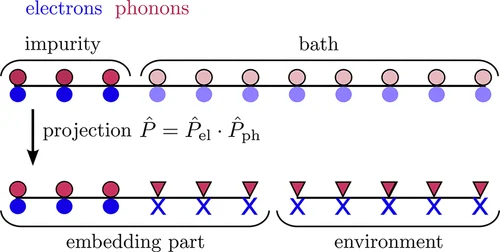 Density-Matrix Embedding Theory Study of the One-Dimensional Hubbard–Holstein ModelTeresa E. Reinhard, Uliana Mordovina, Claudius Hubig, and 5 more authorsJournal of Chemical Theory and Computation, Apr 2019Publisher: American Chemical Society
We present a density-matrix embedding theory (DMET) study of the one-dimensional Hubbard–Holstein model, which is paradigmatic for the interplay of electron–electron and electron–phonon interactions. Analyzing the single-particle excitation gap, we find a direct Peierls insulator to Mott insulator phase transition in the adiabatic regime of slow phonons in contrast to a rather large intervening metallic phase in the anti-adiabatic regime of fast phonons. We benchmark the DMET results for both on-site energies and excitation gaps against density-matrix renormalization group (DMRG) results and find good agreement of the resulting phase boundaries. We also compare the full quantum treatment of phonons against the standard Born–Oppenheimer (BO) approximation. The BO approximation gives qualitatively similar results to DMET in the adiabatic regime but fails entirely in the anti-adiabatic regime, where BO predicts a sharp direct transition from Mott to Peierls insulator, whereas DMET correctly shows a large intervening metallic phase. This highlights the importance of quantum fluctuations in the phononic degrees of freedom for metallicity in the one-dimensional Hubbard–Holstein model.
2018
- A real-time extension of density matrix embedding theory for non-equilibrium electron dynamicsJoshua S. Kretchmer and Garnet Kin-Lic ChanThe Journal of Chemical Physics, Feb 2018
We introduce real-time density matrix embedding theory (DMET), a dynamical quantum embedding theory for computing non-equilibrium electron dynamics in strongly correlated systems. As in the previously developed static DMET, real-time DMET partitions the system into an impurity corresponding to the region of interest coupled to the surrounding environment, which is efficiently represented by a quantum bath of the same size as the impurity. In this work, we focus on a simplified single-impurity time-dependent formulation as a first step toward a multi-impurity theory. The equations of motion of the coupled impurity and bath embedding problem are derived using the time-dependent variational principle. The accuracy of real-time DMET is compared to that of time-dependent complete active space self-consistent field (TD-CASSCF) theory and time-dependent Hartree-Fock (TDHF) theory for a variety of quantum quenches in the single impurity Anderson model (SIAM), in which the Hamiltonian is suddenly changed (quenched) to induce a non-equilibrium state. Real-time DMET shows a marked improvement over the mean-field TDHF, converging to the exact answer even in the non-trivial Kondo regime of the SIAM. However, as expected from analogous behavior in static DMET, the constrained structure of the real-time DMET wavefunction leads to a slower convergence with respect to active space size, in the single-impurity formulation, relative to TD-CASSCF. Real-time DMET provides a promising framework to simulate non-equilibrium electron dynamics in which strong electron correlation plays an important role, and lays the groundwork for future multi-impurity formulations.
-
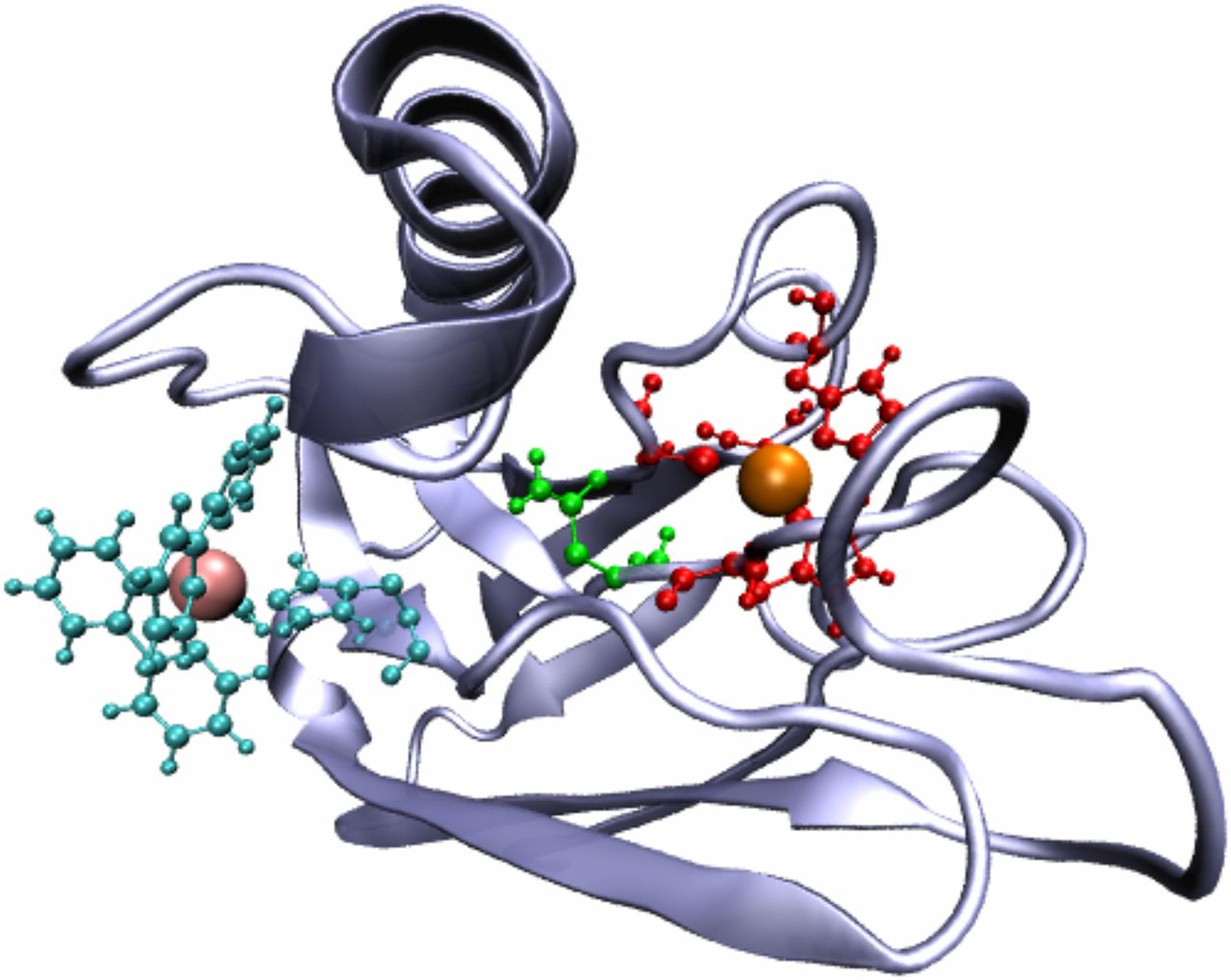 Fluctuating hydrogen-bond networks govern anomalous electron transfer kinetics in a blue copper proteinJoshua S. Kretchmer, Nicholas Boekelheide, Jeffrey J. Warren, and 3 more authorsProceedings of the National Academy of Sciences, Jun 2018Publisher: Proceedings of the National Academy of Sciences
We combine experimental and computational methods to address the anomalous kinetics of long-range electron transfer (ET) in mutants of Pseudomonas aeruginosa azurin, a blue copper protein, revealing that fluctuating hydrogen-bond networks along the electron transfer pathway govern the anomalous kinetics observed experimentally.
-
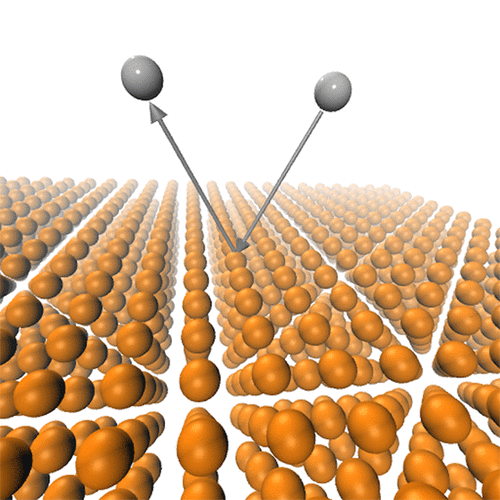 The Fate of Atomic Spin in Atomic Scattering off SurfacesJoshua S. Kretchmer and Garnet Kin-Lic ChanThe Journal of Physical Chemistry Letters, Jun 2018Publisher: American Chemical Society
We explore model electron dynamics of an atom scattering off a surface within the time-dependent complete active space self-consistent field (TD-CASSCF) approximation. We focus especially on the scattering of a hydrogen atom and its resulting spin dynamics starting from an initially spin-polarized state. Our results reveal competing electronic time scales that are governed by the electronic structure of the surface as well as the character of the atom. The time scales and nonadiabaticity of the dynamics are reported on by the final spin polarization of the scattered atom, which may be probed in future experiments.
2017
- Cluster size convergence of the density matrix embedding theory and its dynamical cluster formulation: A study with an auxiliary-field quantum Monte Carlo solverBo-Xiao Zheng, Joshua S. Kretchmer, Hao Shi, and 2 more authorsPhysical Review B, Jan 2017Publisher: American Physical Society
We investigate the cluster size convergence of the energy and observables using two forms of density matrix embedding theory (DMET): the original cluster form (CDMET) and a new formulation motivated by the dynamical cluster approximation (DCA-DMET). Both methods are applied to the half-filled one- and two-dimensional Hubbard models using a sign-problem free auxiliary-field quantum Monte Carlo impurity solver, which allows for the treatment of large impurity clusters of up to 100 sites. While CDMET is more accurate at smaller impurity cluster sizes, DCA-DMET exhibits faster asymptotic convergence towards the thermodynamic limit. We use our two formulations to produce new accurate estimates for the energy and local moment of the two-dimensional Hubbard model for 𝑈/𝑡=2,4,6. These results compare favorably with the best data available in the literature, and help resolve earlier uncertainties in the moment for 𝑈/𝑡=2.
2016
-
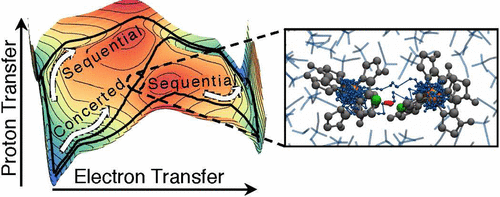 Tipping the Balance between Concerted versus Sequential Proton-Coupled Electron TransferJoshua S. Kretchmer and Thomas F. III MillerInorganic Chemistry, Feb 2016Publisher: American Chemical Society
We use quantized molecular dynamics simulations to investigate the competition between concerted and sequential proton-coupled electron-transfer (PCET) reaction mechanisms in inorganic catalysts. By analyzing reactive nonadiabatic PCET trajectories and computing both concerted and sequential rate constants, we characterize various molecular features that govern inorganic PCET reactions, including the solvent polarity, ligand-mediated electron–proton interactions, and intrinsic proton-transfer (PT) energy barrier. Using atomistic simulations with over 1200 atoms, we find that the symmetric iron biimidazoline system is extremely biased toward the concerted mechanism because of the strong ligand-mediated electron–proton interaction and the short PT distance. However, by investigating system-bath models in which electron–proton interactions are shielded, which are representative of ruthenium terpyridylbenzoates and iron (tetraphenylporphyrin)benzoates, we predict that a crossover between the concerted and sequential PCET mechanisms may be possible either by increasing the polarity of the solvent or by increasing the intrinsic PT energy barrier. In addition, we predict the possibility of a crossover in the PCET mechanism by directly varying the strength of the ligand-mediated electron–proton interactions. The results presented here reveal new strategies for altering the competition between the competing PCET mechanisms and design principles for controlling PCET in catalytic systems.
- Kinetically-constrained ring-polymer molecular dynamics for non-adiabatic chemistries involving solvent and donor–acceptor dynamical effectsJoshua S. Kretchmer and Thomas F. Miller IIIFaraday Discussions, Dec 2016
We investigate the performance of the recently developed kinetically-constrained ring polymer molecular dynamics (KC-RPMD) method for the description of model condensed-phase electron transfer (ET) reactions in which solvent and donor–acceptor dynamics play an important role. Comparison of KC-RPMD with results from Golden-Rule rate theories and numerically exact quantum dynamics calculations demonstrates that KC-RPMD accurately captures the combination of electronic- and nuclear-dynamical effects throughout the Marcus (intermediate solvent friction) and Zusman (large solvent friction) regimes of ET. It is also demonstrated that KC-RPMD accurately describes systems in which the magnitude of the diabatic coupling depends on the position of a dynamical donor–acceptor mode. In addition to these successes, however, we present an unsurprising failure of KC-RPMD to capture the enhancement of the ET rate in the low solvent friction regime associated with nuclear coherence effects. In this analysis, we re-visit several aspects of the original KC-RPMD formulation, including the form of the kinetic constraint and the choice of the mass of the auxiliary electronic variable. In particular, we introduce a Langevin bath for the auxiliary electronic variable to correct for its unphysically low coupling with the nuclear degrees of freedom. This work demonstrates that the KC-RPMD method is well suited for the direct simulation of non-adiabatic donor–acceptor chemistries associated with many complex systems, including those for which solvent dynamics plays an important role in the reaction mechanism.
2013
-
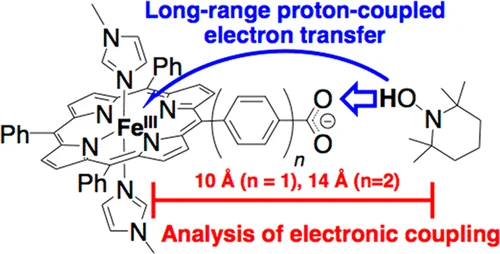 Long-Range Proton-Coupled Electron-Transfer Reactions of Bis(imidazole) Iron Tetraphenylporphyrins Linked to BenzoatesJeffrey J. Warren, Artur R. Menzeleev, Joshua S. Kretchmer, and 3 more authorsThe Journal of Physical Chemistry Letters, Feb 2013Publisher: American Chemical Society
Concerted proton–electron transfer (CPET) reactions in iron carboxytetraphenylporphyrin complexes have been investigated using both experimental and theoretical methods. Synthetic heme models abstract H+ and e– from the hydroxylamine TEMPOH or an ascorbate derivative, and the kinetics of the TEMPOH reaction indicate concerted transfer of H+ and e–. Phenylene linker domains vary the electron donor/acceptor separation by approximately 4 Å. The rate data and extensive molecular simulations show that the electronic coupling decay constant (β) depends on conformational flexibility and solvation associated with the linker domain. Our best estimate of β is 0.23 ± 0.07 Å–1, a value that is near the low end of the range (0.2–0.5 Å–1) established for electron-transfer reactions involving related linkers. This is the first analysis of β for a CPET reaction.
- Direct simulation of proton-coupled electron transfer across multiple regimesJoshua S. Kretchmer and Thomas F. MillerThe Journal of Chemical Physics, Apr 2013
The coupled transfer of electrons and protons is a central feature of biological and molecular catalysis, yet fundamental aspects of these reactions remain poorly understood. In this study, we extend the ring polymer molecular dynamics (RPMD) method to enable direct simulation of proton-coupled electron transfer (PCET) reactions across a wide range of physically relevant regimes. In a system-bath model for symmetric, co-linear PCET in the condensed phase, RPMD trajectories reveal distinct kinetic pathways associated with sequential and concerted PCET reaction mechanisms, and it is demonstrated that concerted PCET proceeds by a solvent-gating mechanism in which the reorganization energy is mitigated by charge cancellation among the transferring particles. We further employ RPMD to study the kinetics and mechanistic features of concerted PCET reactions across multiple coupling regimes, including the fully non-adiabatic (both electronically and vibrationally non-adiabatic), partially adiabatic (electronically adiabatic, but vibrationally non-adiabatic), and fully adiabatic (both electronically and vibrationally adiabatic) limits. Comparison of RPMD with the results of PCET rate theories demonstrates the applicability of the direct simulation method over a broad range of conditions; it is particularly notable that RPMD accurately predicts the crossover in the thermal reaction rates between different coupling regimes while avoiding a priori assumptions about the PCET reaction mechanism. Finally, by utilizing the connections between RPMD rate theory and semiclassical instanton theory, we show that analysis of ring-polymer configurations in the RPMD transition path ensemble enables the a posteriori determination of the coupling regime for the PCET reaction. This analysis reveals an intriguing and distinct "transient-proton-bridge" mechanism for concerted PCET that emerges in the transition between the proton-mediated electron superexchange mechanism for fully non-adiabatic PCET and the hydrogen atom transfer mechanism for partially adiabatic PCET. Taken together, these results provide a unifying picture of the mechanisms and physical driving forces that govern PCET across a wide range of physical regimes, and they raise the possibility for PCET mechanisms that have not been previously reported.
2009
-
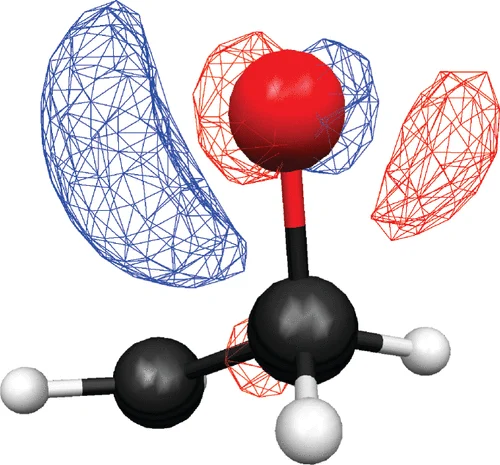 O(3P) + C2H4 Potential Energy Surface: Study at the Multireference LevelAaron C. West, Joshua S. Kretchmer, Bernhard Sellner, and 4 more authorsThe Journal of Physical Chemistry A, Nov 2009Publisher: American Chemical Society
The O(3P) + C2H4 reaction provides a crucial, initial understanding of hydrocarbon combustion. In this work, the lowest-lying triplet potential energy surface is extensively explored at the multiconfiguration self-consistent field (MCSCF) and MRMP2 levels with a preliminary surface crossing investigation; and in cases that additional dynamical correlation is necessary, MR-AQCC stationary points are also determined. In particular, a careful determination of the active space along the intrinsic reaction pathway is necessary; and in some cases, more than one active space must be explored for computational feasibility. The resulting triplet potential energy surface geometries mostly agree with geometries from methods using single determinant references. However, although the selected multireference methods lead to energetics that agree well, only qualitative agreement was found with the energetics from the single determinant reference methods. Challenges and areas of further exploration are discussed.